
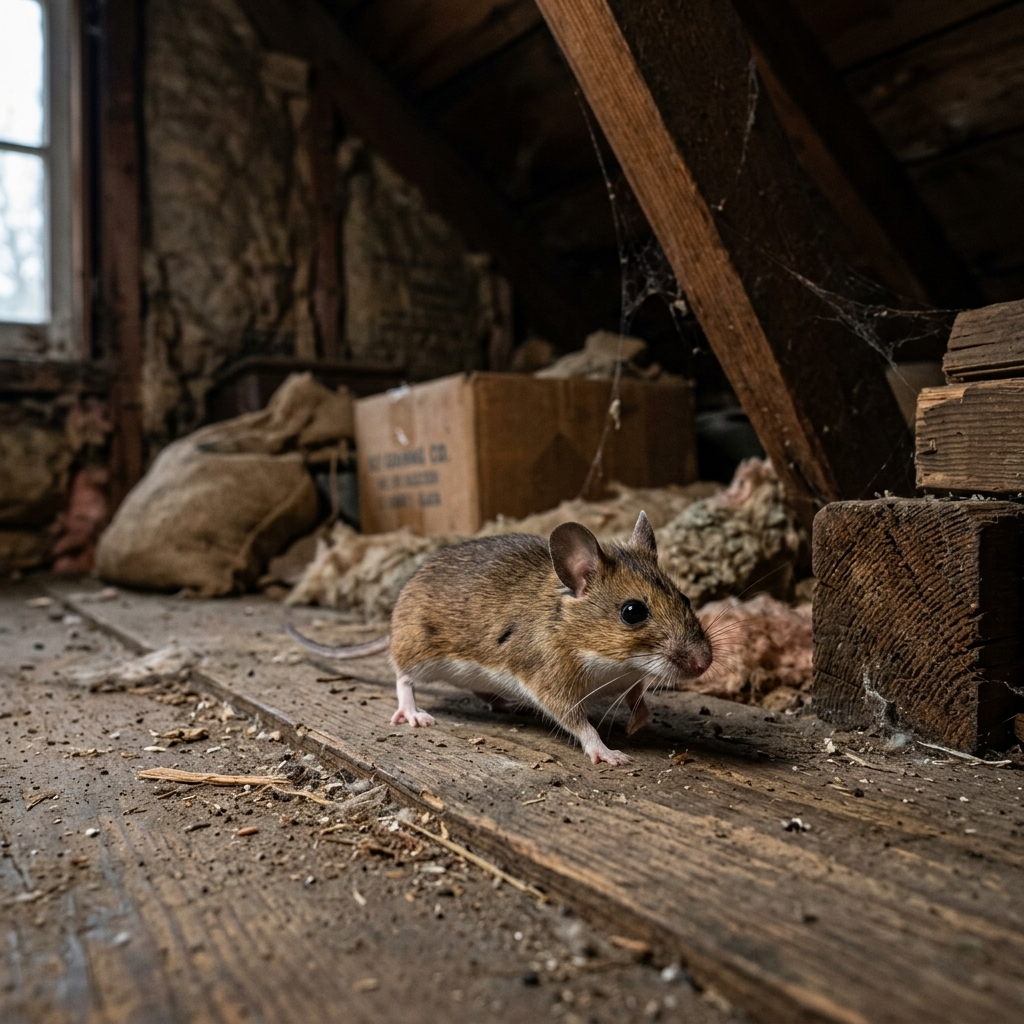
If hantavirus suddenly feels like it's everywhere in the news, you're not imagining it.
Over the past week, U.S. health officials have been monitoring American travelers after a 2026 hantavirus outbreak linked to a cruise ship. The CDC has emphasized that the risk to the general public in the United States remains low, but the outbreak has pushed a familiar question back into the spotlight: Can rodents inside homes and businesses spread dangerous disease?
For homeowners and property managers around Worcester, Boston, and throughout Central Massachusetts, the bigger takeaway isn't panic—it's preparation.
At PestServicesMA.com, one of the most common questions we hear is simple: "Should I be worried if I've seen mice or rats around my property?"
The short answer: yes—but not because every rodent carries hantavirus.
Think of it the way New England fans think about a late-game lead. If the Patriots are up by 10 in the fourth quarter, you don't assume the game is won—you stay disciplined, protect the ball, and avoid mistakes. Rodent prevention works the same way.
What Is Hantavirus?
Hantavirus refers to a group of viruses carried primarily by rodents.
In the United States, hantavirus is best known for causing hantavirus pulmonary syndrome (HPS), a rare but potentially severe respiratory illness. According to the CDC, as of the end of 2023, 890 hantavirus disease cases had been reported in the U.S. since national surveillance began in 1993.
That's an important fact because it cuts through one of the biggest myths.
Myth vs. Fact: What People in Massachusetts Should Know
Myth #1: Hantavirus spreads easily from person to person
Fact: In the United States, hantavirus strains generally do not spread person to person.
The recent cruise-related outbreak involved the Andes strain, a type associated with South America where limited person-to-person transmission has occasionally been documented. U.S. officials still say the overall risk to the public remains low.
Myth #2: Every rat in Boston carries hantavirus
Fact: Not every rodent carries hantavirus.
The rodent most commonly linked with hantavirus in North America is the deer mouse, not every urban rat. Still, rodents of all kinds create health risks because they contaminate surfaces, food storage, insulation, and indoor air.
Myth #3: You only need to worry if you live in the country
Fact: Rodent exposure happens everywhere.
In Massachusetts, rodent activity is common in:
- older homes with stone foundations
- triple-deckers in dense neighborhoods
- garages and sheds
- restaurants and food-service properties
- basements, crawlspaces, and attics
A Worcester basement in January can be just as attractive to mice as a barn in western Mass.
How Does Hantavirus Spread?
This is the part property owners should pay attention to.
According to the CDC and Massachusetts health guidance, hantavirus spreads when people come into contact with infected rodent urine, saliva, or droppings. The most common route is inhalation of contaminated particles in the air.
That means the danger often isn't seeing the rodent.
It's what happens after the rodent has already been there.
For example:
- sweeping dried droppings in an attic
- vacuuming a basement corner where mice nested
- opening a shed after months of winter inactivity
- cleaning behind storage boxes in a garage
When disturbed, dried droppings can release tiny particles into the air.
That's why many exposure cases happen during cleanup.
Think of it like a Bruins playoff forecheck: the real pressure isn't always obvious until you're already trapped in your own zone.
Can Hantavirus Spread in the USA?
Yes—but context matters.
The recent international outbreak has renewed attention in the United States, but health officials continue to stress that there is no sign of widespread community transmission in the U.S.
In America, hantavirus risk is usually tied to environmental exposure to rodents, not casual daily contact with people.
That distinction matters.
For Massachusetts residents, the realistic local concern isn't travelers bringing widespread outbreaks into Worcester or Boston neighborhoods.
The more realistic concern is this:
Rodents inside structures create avoidable exposure risks.
That's a practical pest-control issue—not just a public health headline.
Why Massachusetts Homes and Businesses Should Pay Attention
Rodents love New England for the same reason people do: four distinct seasons and plenty of shelter.
When colder temperatures hit Worcester County, rats and mice head indoors fast.
That means homes and commercial buildings around:
- Worcester
- Shrewsbury
- Holden
- Auburn
- West Boylston
- Grafton
- MetroWest and Greater Boston
all face seasonal rodent pressure.
And once rodents settle in, they don't just chew wires or raid pantry shelves.
They leave behind:
- urine trails
- droppings
- nesting materials
- contaminated insulation
- odor pathways that attract more rodents
Even if hantavirus is rare, rodent contamination itself is not.
Why DIY Cleanup Can Make Things Worse
One of the biggest mistakes property owners make is grabbing a broom.
If you find droppings in a basement or attic, do not sweep or vacuum dry debris immediately.
Public health guidance recommends wet-cleaning contaminated areas instead, because dry sweeping can aerosolize infectious particles.
That's why professional rodent control matters.
A good pest professional doesn't just remove rodents.
They help reduce the environmental conditions that created the problem in the first place.
Why Professional Rodent Pest Control Matters in Worcester and Boston
A mouse problem is rarely just one mouse.
If you've ever watched the Red Sox leave runners on base all night, you know how small missed opportunities become bigger problems.
Rodent infestations work the same way.
One gap under a bulkhead door.
One utility penetration.
One cracked foundation vent.
That's often all it takes.
Professional rodent control in Worcester MA should focus on more than traps.
It should include:
Inspection
A trained technician identifies:
- entry points
- nesting sites
- moisture sources
- food access
- hidden rodent pathways
Exclusion
This is often the most important part.
Sealing access points helps stop new rodents from entering.
Population reduction
Trapping and targeted control reduce active infestations.
Sanitation guidance
Removing attractants helps keep rodents from returning.
That's why long-term rat control Worcester MA and mouse control Boston area require strategy—not just reaction.
Practical Hantavirus Precautions for Homeowners
If you live in Worcester, Central Massachusetts, or Greater Boston, these steps make sense:
- Seal entry points: Rodents can fit through surprisingly small gaps.
- Store food properly: Pet food, bird seed, and pantry goods attract rodents fast.
- Reduce clutter: Basements, sheds, and garages create perfect nesting environments.
- Manage exterior vegetation: Dense shrubs, wood piles, and overgrown foundations create rodent harborage.
- Be careful cleaning rodent droppings: Avoid dry sweeping or vacuuming.
- Call professionals early: Early action is cheaper—and safer—than waiting.
The Bottom Line for Massachusetts Property Owners
The current hantavirus headlines are real.
But the lesson for Worcester and Boston isn't fear.
It's awareness.
Health officials continue to say the risk of widespread U.S. transmission remains low.
Still, rodents remain a very real property and health concern across Massachusetts.
And in New England, ignoring rodent activity is a little like giving up a short-handed goal in Game 7—you may recover, but you've made the game harder than it needed to be.
If you've seen droppings, scratching sounds, gnaw marks, or signs of mice or rats around your home or business, it's smart to act now.
PestServicesMA.com helps homeowners and businesses throughout Worcester and the greater Boston area with rodent control, rat removal, mouse extermination, exclusion services, and long-term pest prevention.
Because when it comes to rodent problems in Massachusetts, the best defense isn't panic.
It's prevention.
Frequently Asked Questions
What is hantavirus and how does it spread in Massachusetts?
Hantavirus is a rare respiratory illness carried by rodents. It spreads primarily when people inhale contaminated particles from infected rodent droppings, urine, or saliva.
Does every rat in Boston carry hantavirus?
No. The deer mouse is the most common carrier in North America. However, all rodents pose health risks by contaminating surfaces and food storage.
Why is DIY cleaning of rodent droppings dangerous?
Dry sweeping or vacuuming dried rodent droppings can aerosolize infectious particles, making them easy to inhale. Public health guidance recommends wet-cleaning instead.