
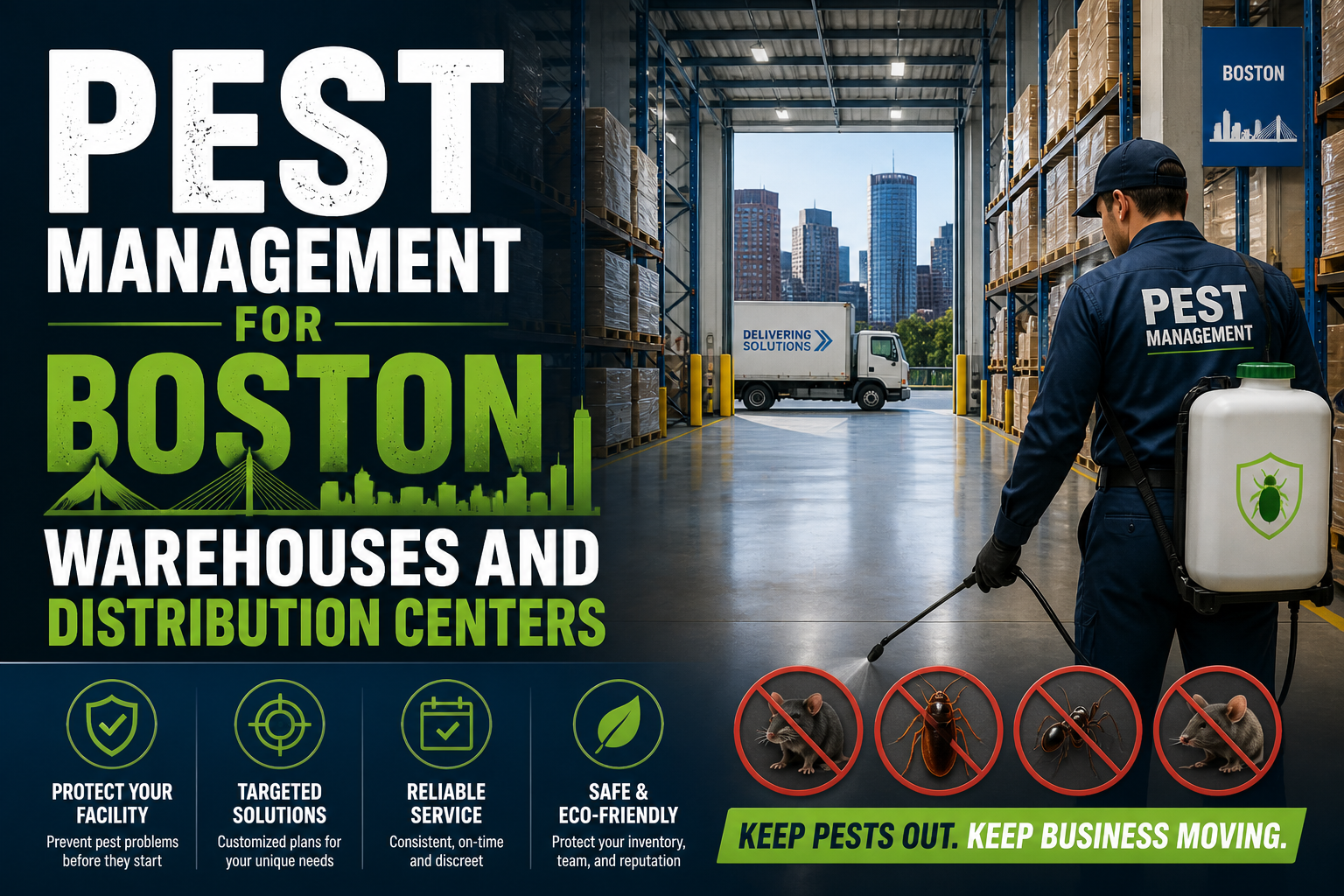
Why Pest Management in Boston Warehouses Is Not Optional Anymore
If you run a warehouse or distribution center in Greater Boston or central Massachusetts, pests are not just a nuisance. They are a liability.
Rats can chew through electrical wiring. Cockroaches can contaminate an entire pallet of goods overnight. A single FDA inspection finding rodent activity in your facility could shut your doors before the lunch break is over.
Boston has always had a rodent problem. The city launched the Boston Rodent Action Plan (BRAP), a multi-agency initiative specifically designed to address the growing rat population across neighborhoods and commercial zones. Norway rats, the most common species in New England, can reproduce up to seven times a year with litters of 6 to 12. Do the math on that inside your loading dock.
In 2024, more than 34 million rodent-related complaints were logged by municipal authorities and pest management firms across the United States. Commercial buildings, including warehouses, accounted for roughly 27% of all reported rodent incidents. That is a lot of damage, a lot of recalls, and a lot of compliance violations.
Pest management for Boston warehouses is not just pest control. It is risk management.
What Pests Are Actually Getting Into Massachusetts Warehouses?
Rodents: The Biggest Threat to Your Bottom Line
Norway rats and house mice are the primary rodent threats in Boston-area warehouses. They enter through gaps as small as a quarter inch around pipes, loading dock doors, and utility lines.
Once inside, they nest inside pallets, behind shelving units, and in wall voids. They contaminate stored goods with droppings and urine. They gnaw through wiring, packaging, and wooden structures. A serious rodent infestation in a food distribution center can result in product recalls costing tens of thousands of dollars.
The damage is not always visible right away. By the time you spot one rat, there are likely dozens more you are not seeing. This is especially true for facilities related to food, similar to how mice affect restaurants and Airbnbs.
Cockroaches and Their Silent Takeover
German cockroaches thrive in the warm, humid corners of warehouses, near drains, break rooms, and compactors. A single female German cockroach can produce up to 300 offspring in her lifetime. Once established, they spread bacteria across surfaces, trigger employee allergies, and are extremely hard to eliminate without professional pest management.
They are also a nightmare for any facility that handles food, pharmaceuticals, or consumer goods. A cockroach spotted by a customer or a health inspector does more reputational damage than most people realize.
Stored Product Pests: The Ones Nobody Talks About
Flour beetles, grain weevils, Indian meal moths, and cigarette beetles are common in Boston-area distribution centers that store dry goods, pet food, grains, or anything with organic material. These insects arrive in shipments, breed inside packaging, and can infest an entire storage section before they are detected.
They are small, they hide well, and by the time you notice damage to product, the infestation is already widespread.
Flies and Drain Pests
Fruit flies, fungus gnats, and drain flies gather around floor drains, trash compactors, and any area where organic material sits. In a busy distribution facility, these pests are both a sanitation issue and a regulatory one. Regular drain cleaning and monitoring as part of a broader pest management plan is the only way to stay on top of them.
How Much Does a Pest Problem Actually Cost a Massachusetts Warehouse?
This is the question most warehouse managers ask before committing to a pest management contract. The honest answer is that the cost of an infestation always exceeds the cost of prevention.
For rodent control alone, commercial businesses in Massachusetts can expect to pay between $300 and $1,000 per treatment for a standard-sized space. For a large warehouse with a serious infestation, comprehensive treatment including exclusion work can run $1,500 or more.
But that is just the treatment cost.
Product recalls due to contamination can cost between $10,000 and several hundred thousand dollars depending on the volume and the distribution chain. OSHA and FDA violations can result in fines and mandatory shutdowns. Lost business from a failed third-party audit, a common requirement for food and pharma distributors, is hard to put a number on.
Commercial pest management services in Massachusetts typically run between $35 and $2,000 per month depending on facility size, pest pressure, and service frequency. A recurring quarterly plan for a mid-sized warehouse often falls in the $400 to $1,200 annual range. For a facility that handles food or regulated goods, monthly service with documentation is the industry standard.
Spending $100 a month on professional pest management beats spending $50,000 on a product recall. Every time.
What Is Integrated Pest Management and Why Boston Warehouses Need It
You have probably heard the term Integrated Pest Management, or IPM. It is not just a buzzword. In Massachusetts, IPM is the approach used by the Boston Public Health Commission, state government buildings, and increasingly by commercial facilities that need to maintain audit-ready documentation.
IPM is a layered approach. It starts with inspection and monitoring, then moves to exclusion and sanitation corrections before any chemical treatments are used. The goal is to address the root cause of pest activity, not just spray and hope for the best.
For a warehouse in Worcester, Framingham, or along the Route 128 corridor, an IPM program typically includes:
- Regular inspections of loading docks, utility penetrations, drains, and storage areas.
- Placement and monitoring of bait stations and traps.
- Identification and sealing of entry points.
- Sanitation assessments and written recommendations.
- Detailed service reports that document all activity and treatments.
That last point matters more than most managers think. If your facility undergoes a third-party food safety audit or an FDA inspection, those pest management records are reviewed. Missing documentation is treated the same as a pest problem.
In 2024, approximately 29% of warehouses and food-service storage facilities installed electronic monitoring systems to track rodent activity. That adoption is rising fast. Remote digital monitoring systems allow pest management professionals to detect activity between scheduled visits, which means problems are caught earlier and service trips are data-driven.
What pestservicesma.com Brings to Central Massachusetts Warehouses
If you are managing a warehouse or distribution facility in central Massachusetts, pestservicesma.com is a local option worth a serious look. They serve the Greater Boston and central Massachusetts area and understand the specific pest pressures that come with New England's climate, older building stock, and dense commercial corridors.
What sets a local specialist apart from a national franchise is accountability. When something goes wrong at 6 PM on a Thursday before a Friday morning audit, you want to reach someone who knows your facility, knows your pest history, and can be there fast. pestservicesma.com offers that kind of responsive, relationship-based service. Their pest management programs for commercial facilities include regular inspections, documented service reports, exclusion work, and ongoing monitoring. They work with food distributors, general warehouses, and logistics operations across the region.
If you have been relying on a national chain that sends a different technician every visit, this is worth a phone call.
How Often Should a Boston Warehouse Have Pest Management Service?
This is one of the most common questions from warehouse managers who are setting up a new service contract or reviewing their current one.
The answer depends on your facility type, but here is a general framework for central Massachusetts operations:
- Food distribution and processing facilities should have monthly service at minimum. Many operate on bi-weekly inspections with continuous monitoring between visits. This is the standard expected by SQF, AIB, and other food safety certification bodies.
- General merchandise warehouses with low pest pressure can often maintain compliance with bi-monthly or quarterly service. However, the first year with any provider should include more frequent visits to establish a baseline and address any existing pest pressure.
- Cold storage facilities need specific attention to pest entry points around refrigeration units and dock levelers, which are common harborage and entry areas that are often overlooked.
Seasonal changes matter in Massachusetts. As temperatures drop from October through February, rodent pressure on warehouses increases significantly. Pests that were living outside begin seeking warmth and move toward buildings. Fall is the most critical time to make sure your exclusion measures are solid and your monitoring stations are positioned correctly.
Common Pest Management Questions from Boston-Area Warehouse Operators
How do I know if my warehouse has a rodent problem before it becomes serious?
Early signs include droppings near walls or along shelving, gnaw marks on packaging or pallets, tracks in dusty areas near entry points, and the smell of ammonia in enclosed spaces. Nocturnal activity means you will rarely see live rodents during the day. Your pest management provider should be placing monitoring stations that detect activity between service visits. If you are not currently receiving any documentation between scheduled visits, that is a gap in your program.
Are the chemicals used in warehouses safe around products and employees?
This is a fair concern, and the answer is yes when the work is done by a licensed professional using an IPM approach. A qualified pest management technician will not broadcast-spray chemicals across your product inventory. Targeted bait stations, mechanical traps, and exclusion materials do the heavy lifting. Any chemical applications are made in areas away from product contact surfaces. If a provider cannot explain exactly what they are applying and why, that should raise a flag.
Do I need a pest management contract, or can I just call when there is a problem?
Reactive pest control is almost always more expensive and more disruptive than a scheduled program. By the time you call because you have a visible problem, the infestation is already established. Ongoing contracts also give you the documentation trail that auditors and regulators expect. A one-time call does not produce the service history a food safety certification body wants to see.
What does an IPM program actually include for a warehouse?
A proper IPM program for a Boston-area warehouse includes an initial inspection and site assessment, placement of tamper-resistant bait stations and monitoring devices, identification and sealing of entry points, written service reports after each visit, sanitation recommendations, and a contact for follow-up between visits. Some providers now include digital monitoring with real-time alerts.
How do I switch pest management providers without creating a gap in coverage or documentation?
Start by requesting your complete service history and all documentation from your current provider before the contract ends. Your new provider should conduct a full site inspection before the transition and use that information to set up monitoring in the right locations. A reputable pest management company will walk you through the handoff process. If your current provider makes it difficult to access your own service records, that tells you something.
The Bottom Line on Pest Management for Boston Warehouses
Pest pressure on Massachusetts warehouses is real, consistent, and year-round. Rodents, cockroaches, stored product pests, and flies are not problems that go away on their own.
A proper pest management program protects your product, your employees, your regulatory standing, and your reputation. The cost of doing it right is far lower than the cost of a failed audit, a product recall, or a citation from the health department.
If you are running a warehouse or distribution center in the Greater Boston or central Massachusetts area and you are not on a documented, professionally managed pest management program, now is the time to fix that.
Reach out to a licensed pest management provider who knows Massachusetts regulations, understands commercial facility requirements, and can give you the documentation your auditors want to see. pestservicesma.com is a solid starting point for central Massachusetts operations.
Do not wait for a rat to show up on camera. That is not a moment you want to explain to a client.
Frequently Asked Questions
What are the most common pests found in Boston warehouses and distribution centers?
The most common pests in Boston-area warehouses are Norway rats, house mice, German cockroaches, stored product insects like grain beetles and flour moths, and drain flies. Rodents are the most damaging, while cockroaches and stored product pests are the most common triggers for food safety violations and product recalls.
How much does pest management cost for a warehouse in Massachusetts?
Pest management costs for Massachusetts warehouses typically range from $300 to $1,000 per treatment for rodent control. Ongoing service contracts for commercial facilities generally run between $400 and $1,200 annually for general warehouses, with food distribution facilities paying more for monthly or bi-weekly service and documentation. The cost of a pest infestation, including product loss, fines, and recalls, nearly always exceeds the cost of a professional pest management program.
How often should a Massachusetts warehouse schedule pest management inspections?
Food distribution and processing warehouses should schedule monthly inspections at minimum, with many opting for bi-weekly visits. General merchandise warehouses with lower pest pressure can often maintain compliance with quarterly service. Seasonal increases in rodent pressure during fall and winter in New England make it especially important to increase monitoring from September through February.
What is integrated pest management and is it required for warehouse facilities in Boston?
Integrated Pest Management, or IPM, is an approach that addresses root causes of pest activity through inspection, monitoring, exclusion, and sanitation before using chemical treatments. While IPM is not legally mandated for all warehouses, it is required or strongly preferred by food safety certification bodies like SQF and AIB, and is the standard used by Massachusetts state facilities. Warehouses handling food, pharmaceuticals, or regulated goods are effectively required to follow IPM principles to pass third-party audits.
What should I look for when hiring a pest management company for my Boston warehouse?
Look for a licensed Massachusetts pest management company that offers written service reports after every visit, a clear IPM approach, experience with commercial and warehouse facilities, and responsive emergency service. Ask how they handle documentation for food safety audits and whether they provide digital monitoring options. Local providers who know the specific pest pressures in central Massachusetts and Greater Boston are often more responsive and accountable than large national chains.
Protect Your Warehouse Today
Don't let a pest problem cost your business. Connect with a licensed Central Mass exterminator today for a custom IPM plan.
Get a Free Inspection →